M35 (Cobalt HSS) is an upgraded version of M2, featuring 5% cobalt to offer higher heat resistance, increased wear resistance, and higher hardness (up to 66 HRC), making it ideal for cutting tough metals like stainless steel. M2 is a tougher, more economical general-purpose steel with superior machinability and crack resistance.
Key Differences:
• Composition: M35 adds ~5% Cobalt to the basic M2 alloy composition.
• Heat & Wear Resistance: M35 has better “red-hardness,” retaining its edge at higher temperatures (650 C° vs 550 C) during high-speed cutting.
• Toughness: M2 is tougher and less brittle, making it more suitable for applications prone to vibration or impact.
• Best Application: Use M35 for stainless steel, hard metals, and production environments requiring high performance. Use M2 for general-purpose drilling, tapping, and workshop tools where high toughness is required.
Feature M2 Tool Steel M35 Tool Steel (Co-HSS)
Cobalt Content 0% ~5%
Wear Resistance High Superior
Heat Resistance Good Excellent
Toughness Superior (Less brittle) Good (More brittle)
Machinability Excellent Moderate
Cost Budget-Friendly Higher (Premium)
Primary Use Mild Low Tensile Steel, Nonferrous Stainless Steel/Hard Metals
When to Choose Which
• Choose M35: If you are drilling or sawing stainless steel, cast iron, or titanium. The cobalt ensures the blade stays sharp despite high friction heat. Run M35 HSS cold saw blades under 50 Meters per Minute (mt/min) or under 160 Surface Feet Per Minute (SFPM or ft/min)
• Choose M2: If you are cutting mild steel, aluminum, copper, brass or other nonferrous metals, cold sawing at higher RPM’s over 50 50 Meters per Minute (mt/min) or 160 Surface Feet Per Minute (SFPM or ft/min)
• or low horsepower/ low torque saws that are manually fed (Jet, Baleigh and other entry level import saws. M2 is more forgiving and M35 is more likely to crack or break.
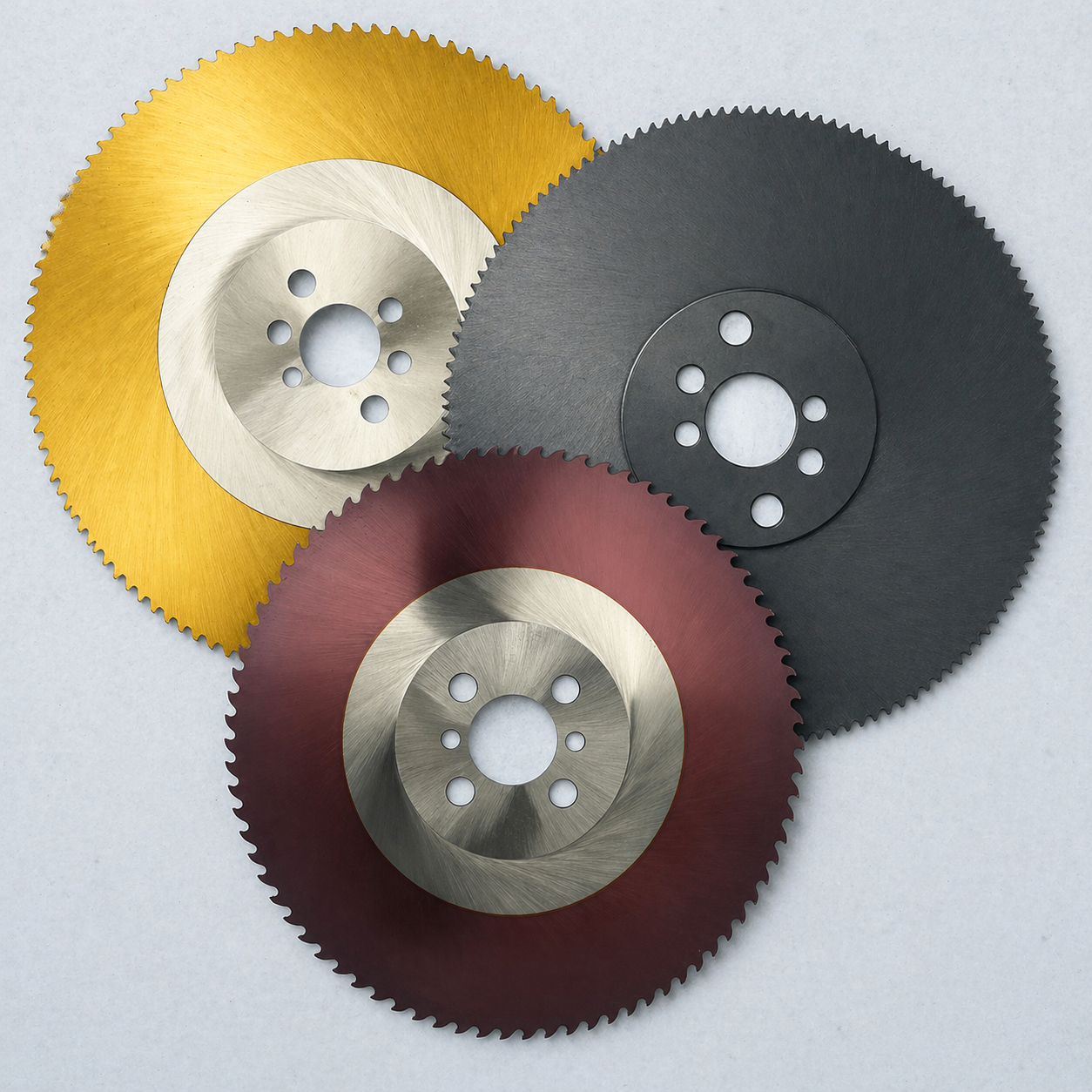
Cold saw blades are commonly used to cut tube, pipe, solid bar, angle iron, casting, forgings, structural shapes, billets etc.
